Walk into any supplement store in India, and you will find protein bars claiming 20 grams of protein, zero sugar, and everything your body needs in a neat little wrapper. Flip it over and read the ingredients list, and you will find a paragraph of numbers, additives, artificial sweeteners, and compounds you cannot pronounce.
Here is the thing: you do not need any of that. Some of the best high protein bars without protein powder can be made at home in under twenty minutes, using ingredients from your local kirana store, with zero compromise on taste, nutrition, or convenience. No chemicals. No artificial flavours. No overpriced supplements.
This recipe- and the variations that follow has been put together with the Indian kitchen in mind. Every ingredient is easily available, genuinely high in protein, and built around real whole foods that your body knows how to use. At Thunderbulll, we encourage clients to fuel their training with proper nutrition, and this recipe is exactly that kind of food. Whether you are following a structured personal training program or online coaching plan, snacks like these integrate seamlessly into any fitness goal.
Not everyone needs or wants to use protein powder, and many people simply do not have access to high-quality options they can trust. The Indian supplement market is flooded with underdosed, mislabelled, and chemically heavy products that do more harm than good when consumed daily.
The good news is that whole food ingredients like peanuts, chana, oats, seeds, and nuts deliver perfectly adequate protein when combined correctly. This whole-food approach is exactly what we recommend in our nutrition guidance for clients aiming for muscle building or sustainable weight loss. A well-made protein bar with natural ingredients in India can hit 8 to 12 grams of protein per bar, comparable to many commercial options while also delivering fibre, healthy fats, and micronutrients that refined powder-based bars typically lack.
These are not just healthy protein bars without chemicals in India; they are genuinely better food than most of what you will find in a supplement shop.
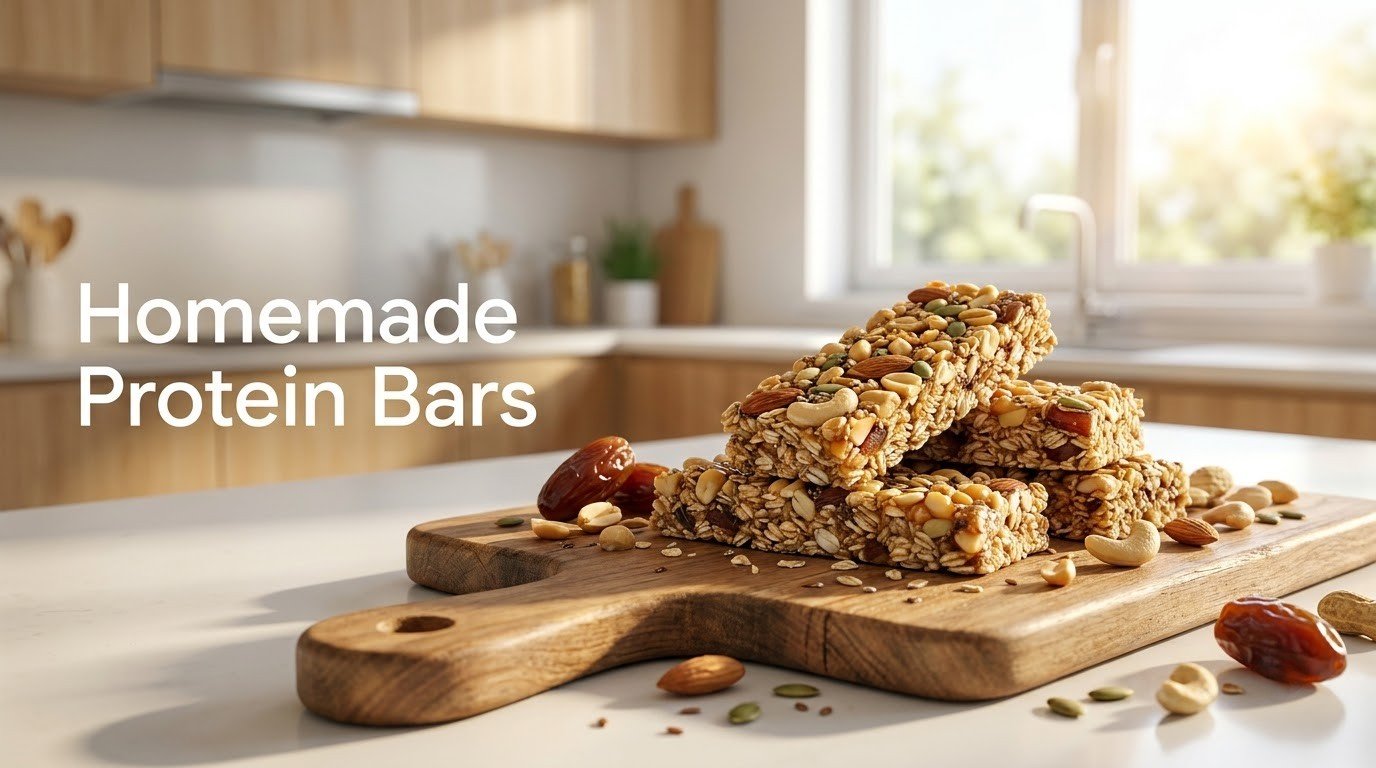
This is the core recipe: simple, reliable, and genuinely high in protein using ingredients that cost a fraction of commercial bars. Once you have made this once, the variations below become easy experiments.
Prep Time: 15 minutes
Set Time: 1–2 hours (fridge)
Makes: 10–12 bars
Protein per bar: ~9–11g
Replace peanut butter with almond butter, add 2 tablespoons of unsweetened cocoa powder, and swap peanuts for roughly chopped almonds. Slightly higher in fat, rich in flavour, and works well as a post-workout bar.
Skip the peanut butter. Instead, melt jaggery in a pan until liquid, mix in roasted groundnuts, sesame seeds, and oats, press firmly into a tray, and allow to set at room temperature. This version is firmer, crunchier, and very close to traditional chikki with added oats for sustained energy.
Reduce peanut butter to half a cup and add half a cup of mixed seed butter (pumpkin, sunflower, watermelon seeds blended together). Add an extra tablespoon of sattu. This variation is ideal for anyone avoiding peanuts and delivers a broader micronutrient profile.
Add half a cup of finely chopped mixed dry fruits, dates, figs, and raisins to the base recipe. Reduce honey or jaggery by half as the dry fruits provide enough natural sweetness. This version is higher in natural sugar but also higher in iron and fibre, good for women or anyone with iron deficiency concerns.
Exact macros will vary based on portion size and ingredient brands, but here is a reasonable estimate per bar for the base recipe cut into 10 pieces:
|
Nutrient |
Per Bar (approx.) |
|
Calories |
180–220 kcal |
|
Protein |
9–11g |
|
Carbohydrates |
18–22g |
|
Fat |
9–12g |
|
Fibre |
3–4g |
These numbers make this one of the better easy homemade protein bars available: calorie-controlled, genuinely high in protein from whole food sources, and with a fibre content most commercial bars cannot match.
Use natural peanut butter, not the sweetened, hydrogenated variety sold in most supermarkets. The ingredient list should read “peanuts” and nothing else. The sweetened versions add unnecessary sugar and often contain palm oil, which defeats the purpose of making a protein bar recipe without protein powder from scratch.
Sattu roasted chana powder is the secret ingredient in this recipe and one of the most underrated high-protein foods in India. A 100-gram serving contains approximately 22 grams of protein. It is cheap, widely available across India, and blends seamlessly into the bar without affecting the flavour. It is the reason this recipe qualifies as a genuinely high protein bar without protein powder rather than just a glorified energy ball.
Press the mixture as firmly as possible into the tray before refrigerating. The biggest reason homemade bars crumble is insufficient compression at this stage. Use the back of a spoon, a flat-bottomed glass, or your hands to press it down with real force.
Thunderbulll's diet consultation covers everything.
Book a Diet ConsultationThese no-bake protein bars without protein powder work well at several points in the day depending on your goal. As a pre-workout snack thirty to forty-five minutes before training, the combination of oats and peanut butter delivers a steady release of energy that sustains performance through the session.
As a post-workout snack within an hour of training, the protein from peanut butter, sattu, and seeds supports muscle recovery. As a mid-morning or afternoon snack, they prevent the energy dip that leads to unhealthy cravings and poor food choices later in the day.
What they are not is a meal replacement. These bars are a supplement to a balanced diet, an easy, portable, homemade protein bar India option for people who train and need a reliable, real-food snack they can carry anywhere.
For a complete nutrition plan that integrates snacks like these into your full daily diet, Thunderbulll’s diet consultation service builds the whole picture around your goal and your lifestyle.
Want a nutrition plan that makes food this simple work for your specific fitness goal?
Book a Free Consultation
Making homemade protein bars without protein powder in India is genuinely easy, genuinely affordable, and genuinely better for your body than most commercial alternatives. The base recipe above delivers real protein from whole food sources, no artificial sweeteners, no undisclosed additives, no ingredients you need a chemistry degree to understand.
Make a batch on Sunday, and you have snacks for the entire week. Adjust the recipe as you go: more sattu for more protein, more oats for more carbs, different nut butters for different flavours. This is food that works with your training, not against it.
For a complete approach to nutrition plan that goes beyond individual recipes and builds a full diet plan around your fitness goal, visit thunderbulll.com and speak to our team about diet consultation in Surat and online.
The key is combining high-protein whole food ingredients sattu (roasted chana powder), peanut butter, oats, seeds, and nuts in the right proportions. The base recipe above uses all of these and delivers 9 to 11 grams of protein per bar with no powder required. The full method is detailed in the recipe card above and takes under fifteen minutes to prepare.
Sattu (roasted chana powder) is the single best natural protein source for homemade protein bars in India. It contains approximately 22 grams of protein per 100 grams, is widely available, inexpensive, and has a neutral enough flavour to blend into almost any recipe. Peanut butter, mixed seeds (sesame, flax, pumpkin), and nuts are excellent supporting ingredients that collectively build a strong protein profile without any powder.
Stored in an airtight container in the refrigerator, these no-bake protein bars in India will stay fresh for up to ten days. If you want to make a larger batch, they freeze very well for up to one month. Simply remove a bar and leave it at room temperature for ten to fifteen minutes before eating.
Yes, when eaten as part of a calorie-controlled diet. Each bar contains approximately 180 to 220 calories with a strong protein and fibre content, both of which support satiety and help reduce overall calorie intake by keeping you full between meals. They are significantly better than biscuits, namkeen, or packaged snacks as a between-meal option for anyone targeting fat loss.
Yes to both. Before a workout, eat one bar thirty to forty-five minutes beforehand for a steady energy source. After a workout, one bar within an hour of training supports muscle recovery with its protein and carbohydrate content. They are versatile enough to work at multiple points in the day and travel well in a container or zip-lock bag.
Get a personal training assessment built for your body. Train in Vesu or try online coaching.
Book Your Assessment